Mediterranean cuisine is often described through familiar dishes such as grilled seafood, salads, pasta, dips, and roasted vegetables. But the character of the cuisine starts with something more fundamental: its ingredients.
Olive oil, vegetables, herbs, grains, legumes, seafood, and dairy form some of the building blocks commonly associated with Mediterranean cooking. Their appeal comes not only from individual flavours, but from how they are combined to create food that can feel fresh, savoury, aromatic, and satisfying without relying on complicated techniques.
At WOODS in Pererenan, these ingredients appear throughout a menu that takes inspiration from Mediterranean cooking while adding its own contemporary approach. Looking at the ingredients behind some of the dishes is a useful way to understand what gives Mediterranean inspired food its distinctive character.
Why Ingredients Matter in Mediterranean Cuisine
The idea behind Mediterranean cooking is not limited to a particular recipe or cooking method. Much of its character comes from the ingredients used repeatedly across different dishes and the way they are brought together.
A simple combination of vegetables, herbs, olive oil, grains, legumes, or seafood can create a dish with several layers of flavour without requiring a long list of ingredients. Fresh produce also plays an important role. Vegetables can provide sweetness, acidity, texture, and colour, while herbs add aroma and freshness.
Olive oil can be used as a cooking fat, dressing, or finishing ingredient. Seafood and dairy introduce richness, while grains and legumes provide substance. These ingredients give cooks a flexible foundation for creating everything from light starters to more substantial main courses.
Essential Mediterranean Ingredients
While Mediterranean cuisine varies considerably across countries and regions, several ingredient groups appear frequently enough to be considered Mediterranean pantry staples.
Olive Oil
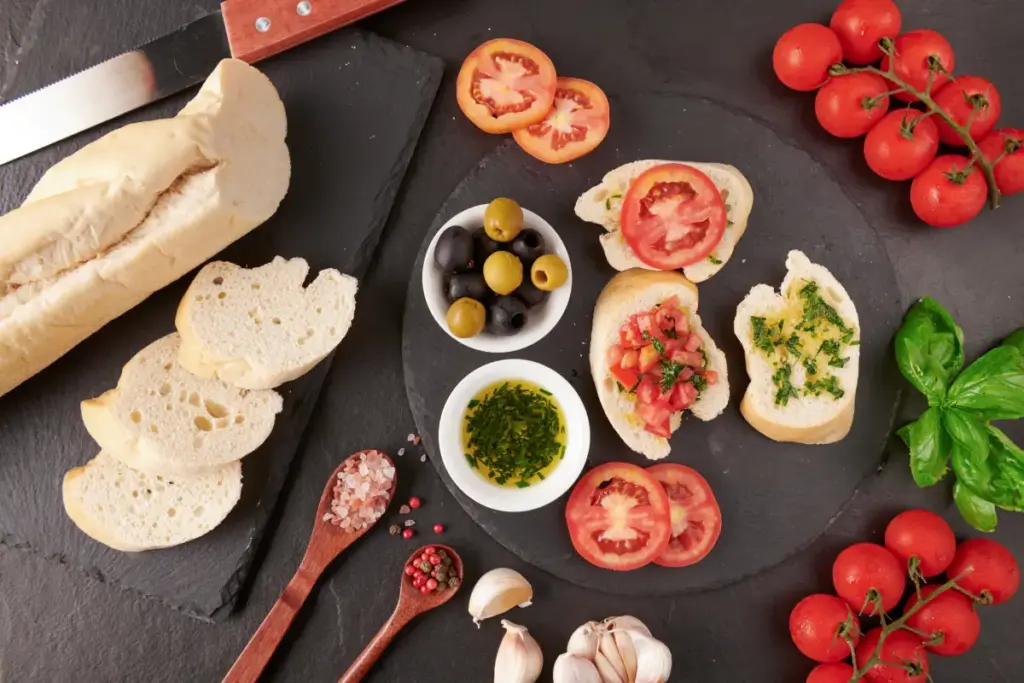
Olive oil is one of the most recognisable ingredients associated with Mediterranean cooking. Its role goes well beyond frying or sautéing. It can be used to dress vegetables, finish dishes, build sauces, or add richness to a preparation.
The flavour can also vary depending on the olive oil itself, which means it can contribute both texture and character to a dish. The broader use of olive oil helps explain why it is such an important part of the Mediterranean culinary tradition.
Vegetables
Vegetables are another major part of Mediterranean cooking. Tomatoes, zucchini, eggplant, peppers, leafy greens, carrots, onions, and other seasonal produce can be roasted, grilled, sautéed, marinated, or served fresh. Their role is not simply to add nutrition or colour. Different cooking methods can bring out sweetness, smokiness, acidity, or texture.
At WOODS, vegetables appear in several forms, from grilled and roasted preparations to fresh accompaniments and more composed dishes.
Herbs
Herbs bring fragrance and freshness to Mediterranean food. Common examples include basil, parsley, oregano, rosemary, sage, and dill, although the specific herbs used vary between dishes and regions. Rather than dominating a dish, herbs can provide a finishing layer that lifts richer or more savoury ingredients.
The Chicken à La Vanille at WOODS, for example, includes a sage leaf alongside glazed baby carrots, potato brandade, and tomato jam. The sage provides an aromatic element within a dish that combines several different textures and flavours.
The Salmon Croissant uses dill with salmon gravlax, asparagus, avocado, sour cream, and balsamic caviar, showing another way herbs can bring freshness to a richer combination.
Grains
Grains provide structure and substance in Mediterranean cooking. Wheat is particularly important, appearing in forms such as bread, pasta, couscous, and other preparations. Grain-based foods can form the foundation of a meal or accompany vegetables, legumes, seafood, and meat.
At WOODS, this influence can be seen through dishes that combine pasta and other grain-based components with vegetables, seafood, herbs, and sauces.
Legumes
Legumes such as chickpeas, lentils, and beans are important sources of texture and substance in many Mediterranean cuisines. Chickpeas, in particular, are closely associated with preparations such as hummus. They can also be incorporated into salads, spreads, and other dishes.
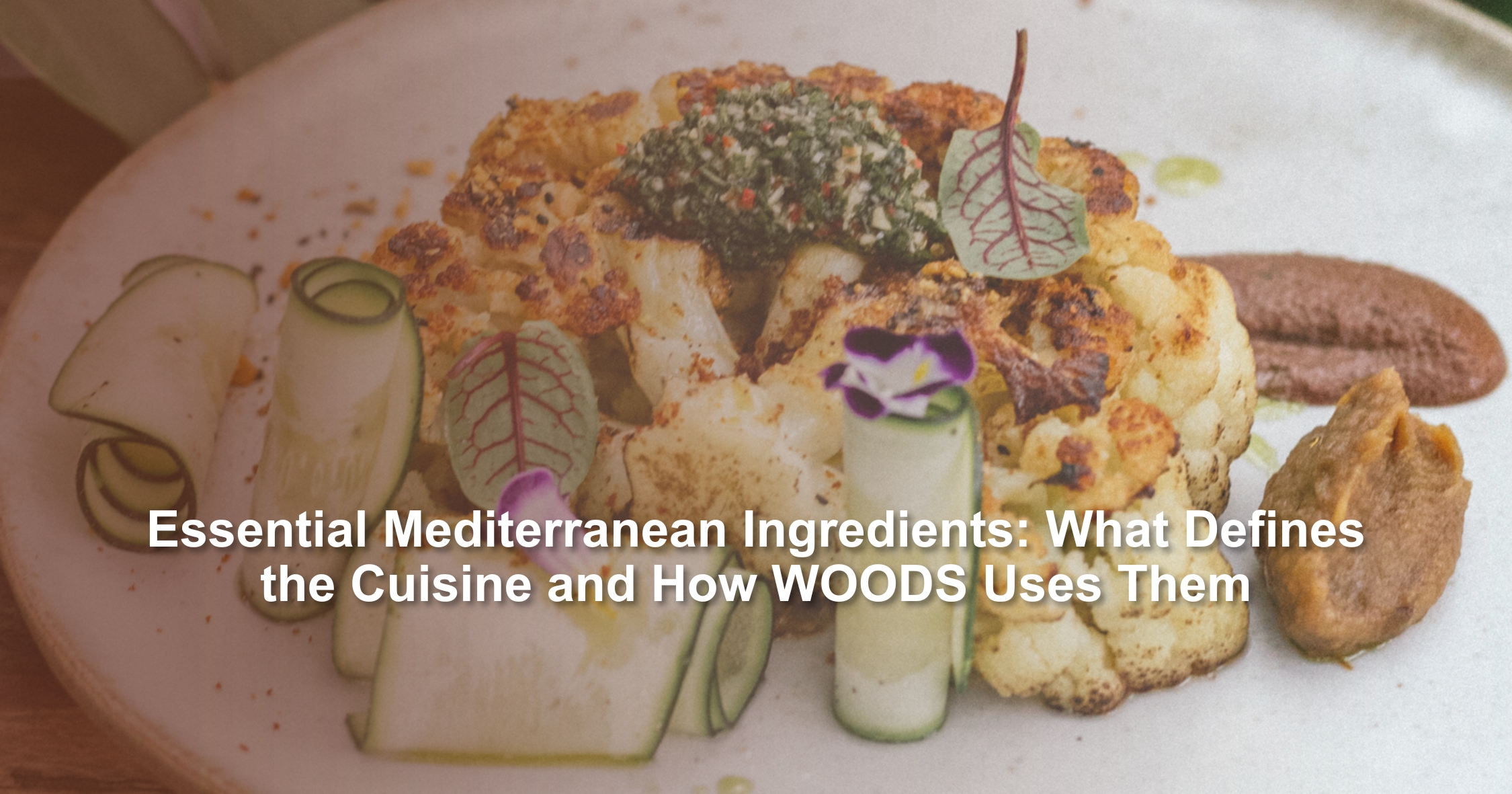
At WOODS, babaganoush appears in dishes such as the Crispy Rolled Zucchini, bringing an earthy, creamy element into a combination of vegetables, vegan feta, pumpkin, pickled beetroot, and green pea sauce.
Seafood
The Mediterranean region’s relationship with the sea has naturally influenced its food culture, making seafood an important ingredient group across many cuisines. Fish and shellfish can be grilled, roasted, cured, or incorporated into pasta and other dishes. Their relatively delicate flavours also work well with ingredients such as olive oil, herbs, vegetables, citrus, and fresh sauces.
WOODS uses seafood in several preparations. The Salmon Croissant, for example, features salmon gravlax with asparagus, avocado, sour cream, balsamic caviar, and dill. The combination demonstrates how seafood can be paired with fresh vegetables, herbs, and creamy elements rather than relying on heavy seasoning.
Dairy and Cultured Ingredients
Dairy adds richness and contrast to Mediterranean-inspired dishes. Depending on the cuisine, this can include yoghurt, feta, labneh, sour cream, soft cheeses, and other fresh or cultured dairy products. These ingredients can soften stronger flavours, add creaminess, or create a contrast with roasted or grilled vegetables.
The Salmon Croissant uses sour cream alongside cured salmon and fresh vegetables, while WOODS’ Crispy Rolled Zucchini uses vegan feta to provide a similar creamy and slightly tangy element without dairy.
How WOODS Brings Mediterranean Ingredients Together
Understanding individual ingredients is useful, but their combinations are what make a dish distinctive. WOODS uses Mediterranean-inspired ingredients alongside contemporary techniques and combinations, creating dishes that do not necessarily follow one traditional regional recipe.
Chicken à La Vanille
View this post on Instagram
The Chicken à La Vanille brings several ingredient groups together in one dish. It features glazed baby carrots, sage leaf, potato brandade, and tomato jam. The carrots provide natural sweetness, while sage adds an aromatic herbal note. Potato brandade brings a creamy, substantial element, and tomato jam introduces concentrated sweetness and acidity.
Rather than relying on a long list of seasonings, the dish builds its flavour through the contrast between these components.
Salmon Croissant
View this post on Instagram
The Salmon Croissant demonstrates how seafood, vegetables, herbs, and cultured dairy can work together. Salmon gravlax provides the main savoury element, while asparagus and avocado bring freshness and texture. Sour cream adds creaminess, dill adds an aromatic note, and balsamic caviar provides acidity and a small burst of flavour. The combination is lighter in character while still offering enough richness to work as a substantial meal.
Crispy Rolled Zucchini
View this post on Instagram
The Crispy Rolled Zucchini takes a vegetable-led approach. Zucchini is combined with babaganoush, vegan feta, pumpkin, pickled beetroot, and green pea sauce. Several different flavour profiles appear in one dish: the earthiness of eggplant-based babaganoush, the sweetness of pumpkin, the acidity of pickled beetroot, and the freshness of green peas. It is a good example of how vegetables can provide the foundation of a dish rather than simply acting as a side.
How Mediterranean Ingredients Create Recognisable Flavours
One of the defining characteristics of Mediterranean-inspired cooking is the balance between individual ingredients. Fresh vegetables can bring sweetness or acidity. Herbs add aroma. Olive oil contributes richness and carries other flavours. Seafood offers delicate savouriness, while dairy and legumes add creaminess and substance. The result is often less about one dominant seasoning and more about contrast.
A creamy element can sit alongside something acidic. Roasted vegetables can be paired with fresh herbs. Seafood can be balanced with vegetables and cultured dairy. Pickled ingredients can cut through richer components. This balance is one reason the same core Mediterranean food ingredients can appear across very different dishes while producing distinctly different results.
Read also: Healthy Comfort Food in Pererenan: Balanced Mediterranean Meals
Mediterranean Ingredients at WOODS Pererenan
WOODS’ menu shows how Mediterranean inspired cooking can be interpreted through a contemporary restaurant setting in Bali. Rather than limiting the menu to a fixed list of traditional dishes, WOODS works with familiar Mediterranean ingredients and combines them with different preparations, textures, and presentations.
The examples above show this clearly. Sage and tomato appear alongside chicken and potato. Salmon is paired with dill, asparagus, avocado, and sour cream. Zucchini is combined with babaganoush, vegan feta, pumpkin, beetroot, and green pea sauce. These combinations reflect the broader role of Mediterranean ingredients: they provide a foundation, but the final character of a dish comes from how those ingredients are balanced and prepared.
That approach is part of what defines Mediterranean cuisine at WOODS Pererenan. The menu draws from the ingredients and flavours associated with Mediterranean cooking while allowing the kitchen to interpret them in its own contemporary style.