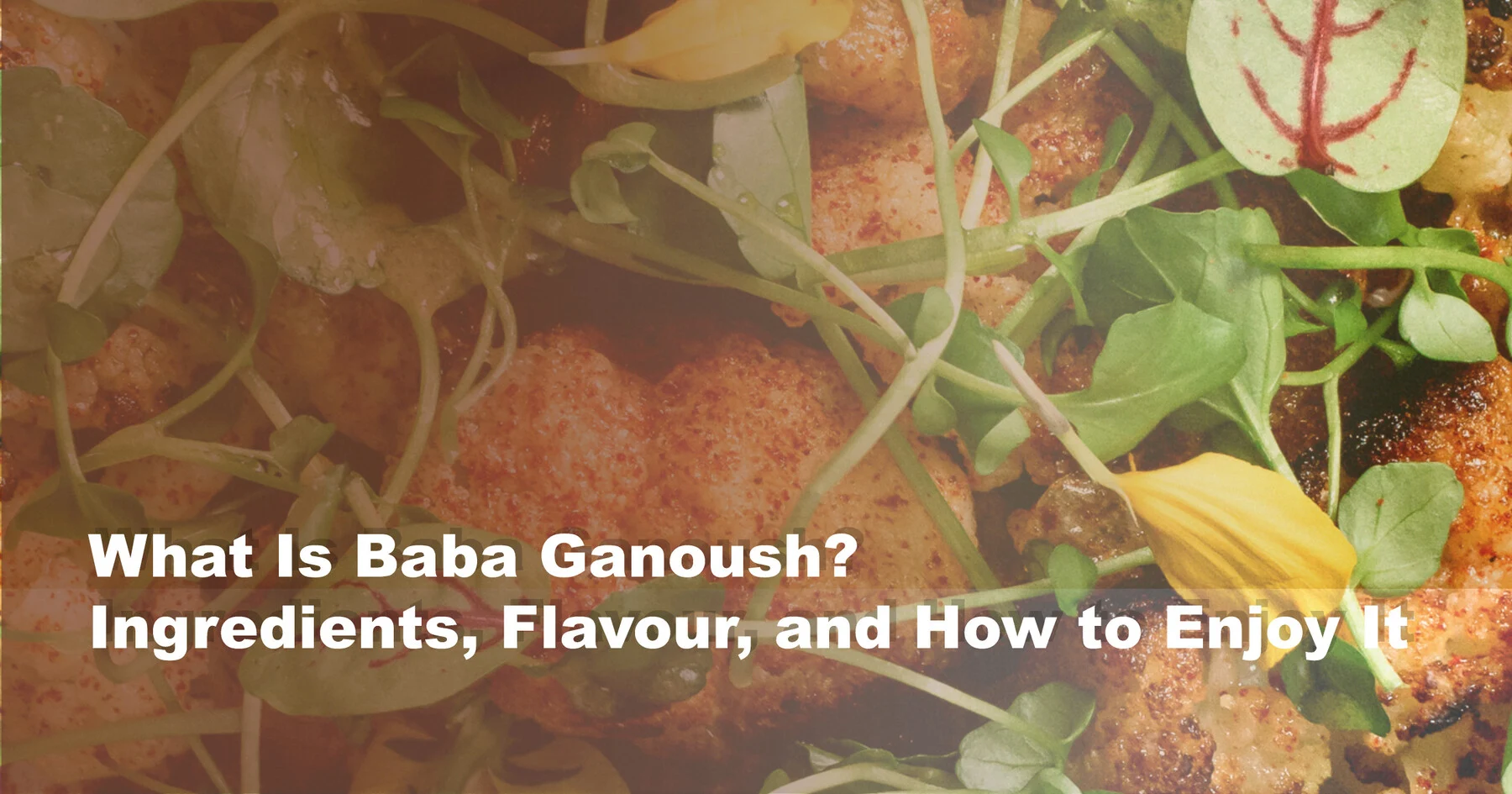
If you love hummus but haven’t tried baba ganoush yet, you’re in for a lovely introduction to another Mediterranean favourite. This creamy eggplant dip is known for its smoky flavour, smooth texture, and simple ingredients. Often enjoyed with warm bread, fresh vegetables, or as part of a mezze platter, baba ganoush is a delicious example of how Mediterranean cooking can turn a humble vegetable into something special.
What Is Baba Ganoush?
Baba ganoush is an eggplant-based dish associated with Levantine and Middle Eastern cuisine. It’s commonly served as a dip or appetizer, although recipes and names can vary between countries and families.
The main ingredient is eggplant, which is roasted or grilled until the inside becomes soft. The cooked flesh is then mixed with other ingredients to create a creamy, flavourful dip. What makes baba ganoush different from many other vegetable dips is its distinctive smoky character.
That smokiness comes from the way the eggplant is cooked, especially when it’s roasted over an open flame. The result is something earthy, tangy, and wonderfully savoury.
What Is Baba Ganoush Made Of?
Traditional baba ganoush ingredients are surprisingly simple. Most versions begin with roasted eggplant, then add ingredients that complement its natural flavour.
Common ingredients include:
- Eggplant: The main ingredient, providing the creamy texture and smoky taste.
- Tahini: A sesame paste that adds richness and a slightly nutty flavour.
- Lemon juice: Brings freshness and acidity.
- Garlic: Adds a savoury, aromatic note.
- Olive oil: Often mixed in or drizzled over the finished dip.
- Salt and herbs: Used to balance and finish the flavour.
Not every recipe is identical. Some families use more lemon, others prefer extra garlic, and some versions have a chunkier texture. That’s part of what makes traditional food so interesting. The same dish can taste slightly different depending on who’s preparing it.
What Does Baba Ganoush Taste Like?
If you’ve never tried baba ganoush, imagine a creamy vegetable dip with a gentle smoky flavour. Unlike hummus, which is mostly made from chickpeas, baba ganoush has a lighter eggplant base.
The flavour is usually a combination of:
- Smoky: From the roasted or grilled eggplant.
- Tangy: Thanks to fresh lemon juice.
- Nutty: When tahini is included.
- Savoury: From garlic, olive oil, and seasoning.
Its texture can range from smooth and creamy to slightly rustic. Neither version is necessarily better. It’s simply a matter of preference. If you enjoy grilled vegetables, creamy dips, or Mediterranean appetizers, there’s a good chance you’ll appreciate baba ganoush.
Baba Ganoush vs. Hummus: What’s the Difference?
Baba ganoush and hummus often appear together on a Mediterranean sharing table. They may look similar, but they’re made from different main ingredients.
| Elements | Baba Ganoush | Hummus |
| Main ingredient | Eggplant | Chickpeas |
| Typical flavour | Smoky and tangy | Nutty and savoury |
| Texture | Creamy or slightly rustic | Usually smooth and thick |
| Common pairing | Bread and vegetables | Bread and vegetables |
Both can contain tahini, lemon, garlic, and olive oil. But they offer different flavours, which is exactly why they work so nicely together. You don’t have to choose one over the other. A little of each makes a lovely addition to a mezze table.
How Do You Eat Baba Ganoush?
There’s no complicated technique involved in enjoying baba ganoush. It’s usually served as part of a meal rather than eaten on its own.
Some popular ways to enjoy it include:
- Scooping it up with warm pita bread.
- Pairing it with cucumber, carrots, or other vegetables.
- Serving it alongside grilled eggplant or zucchini.
- Adding it to a Mediterranean mezze platter.
- Enjoying it as an accompaniment to grilled dishes.
Baba ganoush also works particularly well when the table includes different textures. Something fresh and crunchy can balance its creaminess, while warm bread makes it wonderfully comforting.
Mediterranean Eggplant Flavours at WOODS Bali
At WOODS, we enjoy bringing familiar Mediterranean ingredients together in ways that encourage guests to explore different flavours. Eggplant is one of those ingredients. Our Grilled Mixed Vegetables from the Sharing Mezze menu come with babaganoush and labneh, bringing together grilled vegetables, a creamy eggplant preparation, and tangy yoghurt.
You’ll also find babaganoush in our Sliced Avocado on Toast, where it complements fresh avocado, sourdough, cherry tomatoes, and char-grilled lemon. For something more substantial, our Crispy Rolled Zucchini includes babaganoush alongside vegan feta, pumpkin mash, pickled beetroot, and green pea sauce.
These dishes show how a simple eggplant preparation can work with very different ingredients. To discover more ways we bring Mediterranean flavours together, read also: Healthy Sharing Plates in Bali: Building a Balanced Mediterranean Table at WOODS.
Discover the Flavour of Baba Ganoush
Baba ganoush is a lovely reminder that good food doesn’t always need complicated ingredients. With roasted eggplant, a little tahini, lemon, garlic, and seasoning, you can create something full of flavour. Whether you enjoy it with bread, vegetables, or as part of a larger meal, this Mediterranean eggplant dip is worth getting to know.
If you’re curious to experience these flavours in Pererenan, come visit our restaurant at WOODS Bali. Explore the dishes on our menu that feature babaganoush, enjoy a few Mediterranean-inspired sharing plates, and discover how beautifully simple ingredients can come together.