
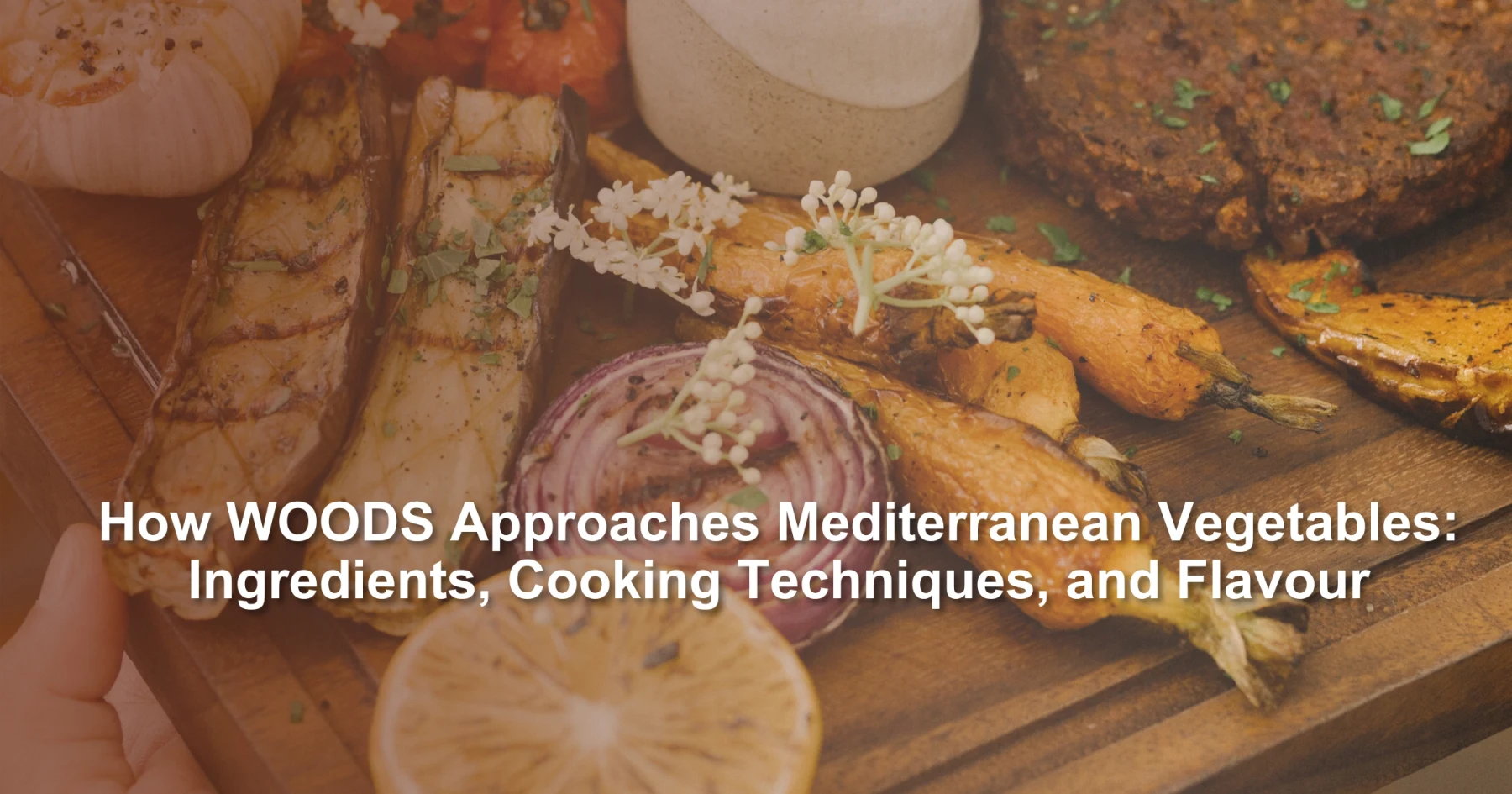
Vegetables are not simply side dishes in Mediterranean cooking. They can bring sweetness, acidity, smokiness, freshness, creaminess, and texture to the same table, depending on how they are prepared.
That approach can be seen across the menu at WOODS in Pererenan. Rather than treating vegetables as an afterthought, the restaurant uses techniques such as grilling, roasting, charring, pickling, and dressing to build flavour into vegetableled dishes as well as seafood and other mains.
From Crispy Rolled Zucchini served with babaganoush and pickled beetroot to Grilled Mixed Vegetables with labneh, the menu shows how vegetables can become the main part of a dish without making the food feel overly complicated.
The Role of Vegetables in Mediterranean Cooking
Mediterranean cooking is often associated with ingredients such as olive oil, fresh herbs, vegetables, legumes, seafood, grains, and dairy. But the appeal is not simply in the ingredients themselves. Much of the character comes from how they are prepared and combined.
View this post on Instagram
A tomato can be served fresh for acidity and juiciness, while roasting brings out more sweetness. Eggplant becomes softer and smokier when grilled. Zucchini can remain fresh and delicate when lightly cooked, or develop deeper flavour when charred or roasted.
The same principle applies to seasoning. A vegetable does not necessarily need a complicated sauce to become interesting. Olive oil, herbs, citrus, spices, nuts, creamy accompaniments, or a little acidity can change the balance of a dish. This gives Mediterranean style vegetable cooking plenty of flexibility. A plate can be fresh and light, smoky and rich, or somewhere between the two.
Read also: Essential Mediterranean Ingredients: What Defines the Cuisine and How WOODS Uses Them
How Mediterranean Chefs Cook Vegetables
There is no single Mediterranean vegetable cooking technique. Different methods bring out different characteristics from the same ingredient.
Roasting brings out natural sweetness
Roasting exposes vegetables to dry, high heat, which encourages browning and concentrates their natural flavours. Vegetables with more moisture can become softer inside while developing caramelised edges. This works particularly well with ingredients such as pumpkin, beetroot, carrots, and other root vegetables.
At WOODS, roasting appears in dishes such as the Vegan Pumpkin Salad, which combines roasted beetroot with asparagus, radish, zucchini, macadamia pesto, turmeric tofu cheese, and balsamic caviar. The roasted beetroot adds a deeper, sweeter element alongside the fresher vegetables.
The current menu also includes Marinated Roasted Pumpkin, served with cauliflower emulsion, mushroom, broccoli, baby carrot, pickled shallot, green asparagus, basil oil, and coconut foam. Here, roasted pumpkin is part of a much broader combination of textures and flavours rather than being served on its own.
Read also: Sunday Roast With Live Jazz at WOODS Pererenan: A Relaxed Sunday Lunch in Bali
Grilling adds smoke and char
Grilling is one of the simplest ways to give vegetables a stronger flavour. Direct heat creates charred surfaces while allowing the vegetable itself to retain some of its natural character. Eggplant is particularly suited to grilling because its soft texture absorbs smoky flavours easily. At WOODS, Grilled Eggplant is served with tahini sauce, creating a straightforward combination of smoky vegetable flavour and creamy, nutty tahini.
Grilled Mixed Vegetables take the same general idea further. The vegetables are served with babaganoush and labneh, bringing together grilled flavours with creamy and smoky accompaniments. The result is more substantial than a basic vegetable side. Different textures and flavours give the vegetables a central role at the table.
Charring creates contrast
Charring is slightly different from simply cooking a vegetable until tender. The aim is to develop pronounced colour and flavour on the outside while retaining a different texture underneath. This contrast can make relatively mild vegetables much more interesting.
WOODS applies this approach to ingredients across the menu. The Charred Hearth Artichoke, for example, is paired with asparagus, potato velouté, basil oil, shallot marmalade, balsamic salsa, watercress, and red radish. The artichoke is therefore only one part of the flavour structure. The dish combines charred vegetable character with creamy, fresh, sweet, and acidic elements.
Olive Oil, Herbs, and Acidity Build the Flavour
One of the useful principles in Mediterranean cooking is that vegetables do not have to be heavily seasoned to taste full of flavour. Good ingredients can be supported by a few complementary elements. Olive oil is particularly useful because it can add richness while carrying herbs, spices, and other flavours across the dish.
Herbs can then bring freshness. Basil, parsley, dill, coriander, and other herbs appear throughout the WOODS menu, often alongside vegetables, seafood, salads, and sauces. Acidity is another important part of the balance. Lemon, balsamic, pickled vegetables, and other acidic ingredients can cut through richer components and make a dish feel brighter.
You can see this principle in several WOODS dishes. The Beetroot Salad combines roasted beetroot with stracciatella, arugula, walnuts, asparagus, balsamic reduction, green oil, and fresh lemon. The beetroot provides earthy sweetness, while lemon and balsamic bring acidity to balance the richer elements.
Vegetable Dishes Can Have Multiple Textures
Good vegetable cooking is not only about flavour. Texture is equally important. A plate becomes more interesting when soft vegetables are combined with something crisp, creamy, fresh, or slightly chewy. This is particularly clear in WOODS’ Crispy Rolled Zucchini. The zucchini is served with babaganoush, vegan feta, pumpkin mash, pickled beetroot, and green peas sauce.
The dish brings together several textures in one plate: soft zucchini, creamy pumpkin, smooth babaganoush, and the sharper character of pickled beetroot. The combination shows how a vegetable-led dish can have the structure of a substantial main rather than simply functioning as a side.
The menu also includes Green Zucchini Fritter with dill yogurt, sumac, cress mix salad, and olive oil dressing. Here, the fritter provides a cooked and textured element, while yogurt, sumac, fresh greens, and olive oil create contrast around it.
Vegetables Can Support Seafood Without Disappearing
Mediterranean style cooking does not require vegetables and seafood to be treated separately. They can be used together so that the vegetables contribute flavour, freshness, and texture to the main dish. WOODS’ Seared Barramundi Fillet is a good example. The fish is served with cauliflower purée, cherry tomatoes, snowpeas salad, grilled artichoke, lemon butter sauce, and basil oil.
The vegetables do more than add colour to the plate. Cauliflower provides a soft base, snowpeas bring freshness and crunch, while grilled artichoke contributes a deeper, charred flavour. Lemon butter and basil oil then add brightness and richness.
This is one of the strengths of vegetable cooking in a Mediterranean inspired menu. Vegetables can change the character of a seafood dish without competing with the main ingredient.
Why Preparation Matters as Much as the Vegetable
It is easy to think about vegetables by ingredient alone: zucchini, eggplant, pumpkin, beetroot, artichoke, or carrot. But cooking technique can completely change how the same vegetable tastes.
View this post on Instagram
Grilling can make it smoky. Roasting can make it sweeter. Pickling can make it sharper. Charring can add bitterness and depth. Fresh herbs can make a rich preparation feel lighter, while olive oil can bring everything together. That is why Mediterranean vegetable dishes can feel varied even when they rely on relatively familiar ingredients.
At WOODS, this can be seen across the menu rather than in one particular dish. Vegetables appear raw, roasted, grilled, charred, pickled, puréed, and incorporated into sauces and salads.
Exploring Mediterranean Vegetables at WOODS
If vegetables are usually something you order on the side, the WOODS menu offers a different way to approach them. For a vegetable focused meal, dishes such as Grilled Mixed Vegetables, Grilled Eggplant, Mediterranean Garden Salad, and Green Zucchini Fritter make it possible to build a table around different preparations.
Crispy Rolled Zucchini and Marinated Roasted Pumpkin offer more substantial vegetable-led choices, while dishes such as Seared Barramundi Fillet show how vegetables can become an important part of a seafood main.
The interesting part is not simply that WOODS serves vegetables. It is how different techniques give those vegetables different roles on the plate. Grilling adds smoke. Roasting develops sweetness. Pickling brings acidity. Herbs and olive oil add freshness and richness. Sauces and accompaniments create contrast.
That is what makes Mediterranean vegetable cooking so useful: the food does not have to be complicated to be layered with flavour. At WOODS, those principles come together through a menu where vegetables can be a side, a sharing plate, a main ingredient, or an important part of a larger dish.